
In the ever-evolving world of artificial intelligence (AI), machines are not only assisting human creators but are starting to generate unique works on their own, from music to visual art and even innovative designs. This surge in AI-driven creativity brings up a big question: Who owns AI creations? In this blog post, we’ll dive into the world of intellectual property (IP) rights surrounding AI-generated content, examining the legal challenges and discussing potential ways to adapt IP laws in the age of AI.
The AI Creations Boom: New Questions for IP Rights
Artificial intelligence is becoming a creative powerhouse. Today, AI programs can compose music, design artwork, generate text, and even invent new products. But as AI plays a greater role in creating original work, traditional IP laws struggle to keep pace. Under current law, copyright and patent rights generally require a human author or inventor, which complicates matters for creations produced by AI with little to no human input.
So, who owns AI creations when no human can claim full authorship? This question is at the heart of current IP debates, pushing experts and legislators to consider how to protect AI-generated works without compromising the value of human creativity.
Current IP Laws and AI: A Misfit?
- Copyright and Authorship
Copyright law typically grants protections only to human creators. For example, in the United States, the Copyright Office has explicitly stated that it does not recognize AI as an author. This is because copyright requires “originality” from a human author, which does not align with the automatic, algorithm-driven outputs of AI systems.
This means that, as of now, AI-generated works are generally considered unprotectable under copyright law if they lack significant human intervention. However, in some cases, human operators or businesses using AI may be able to claim rights if they can demonstrate substantial creative input in the AI’s work. - Patents and AI-Generated Inventions
Patents protect inventions that demonstrate novelty, utility, and a significant human inventive process. But what about when AI creates an entirely new product design or innovation? In recent cases, such as the DABUS AI invention application, courts have denied patents for AI-generated inventions, reaffirming that only humans can be recognized as inventors under current law. This stance creates uncertainty for companies and innovators relying on AI for inventive processes, especially as the technology becomes more autonomous.
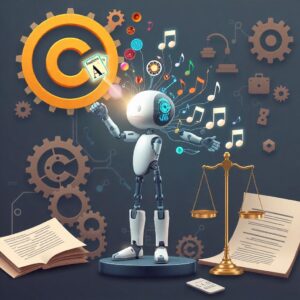
Possible Approaches to AI Ownership and IP Rights
With the rise of AI-created works, several potential approaches are emerging to help bridge the gap between current IP laws and the realities of AI-driven innovation:
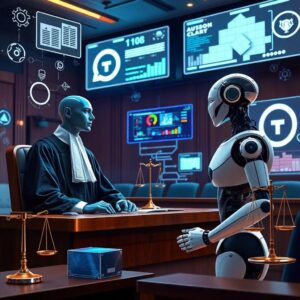
- Human-Centered Ownership
One approach is to treat AI as a tool or collaborator, where the human operator maintains primary ownership of the work. Under this model, those who design, program, or direct the AI may hold the copyright or patent rights. This approach aligns with current laws but may become less practical as AI tools become more autonomous and capable of producing complex works without much human direction. - Hybrid or Shared Ownership Models
A more flexible option involves hybrid models where AI and its human operators share ownership. This could apply especially to cases where the AI performs a major part of the creative process, but a human guides or refines its output. Shared ownership could incentivize AI-driven innovation while respecting human contributions. - New IP Classifications for AI-Generated Works
Some experts advocate creating a new category of IP rights specifically for AI-generated content. This new classification could offer limited protections for AI-created works, recognizing the machine’s role in creation without granting full copyright or patent rights. Such protections could encourage investment in AI innovation while maintaining a distinction from human-authored IP.
Moving Forward: Adapting IP Law for an AI-Driven World
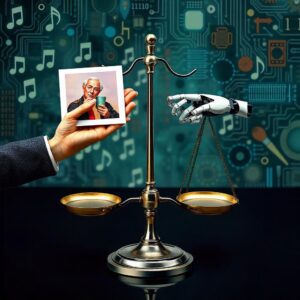
The question of “Who owns AI creations?” isn’t just about legal definitions—it’s about fostering innovation and ensuring fair rewards for both human and AI contributions. As AI systems continue to improve, the need to adapt IP frameworks is becoming more urgent. Some experts propose that IP laws could gradually shift to recognize certain AI-generated works, while still preserving the core principle that creativity is a uniquely human endeavor.
In the meantime, creators, businesses, and developers working with AI should consider practical ways to protect their IP. These could include securing detailed records of AI inputs and human interactions, formalizing agreements on ownership with AI partners, and closely following the latest developments in IP law.
Conclusion
AI is challenging traditional ideas of creativity, authorship, and ownership. As we continue to unlock AI’s potential, adapting intellectual property laws to answer the question “Who owns AI creations?” will be key to promoting innovation and balancing both human and machine contributions. By staying informed and exploring adaptive IP strategies, creators and businesses can navigate this rapidly changing landscape and make the most of what AI has to offer.
- Human-Centered Ownership